Pikkdogs

Pikkdog’s Tips for Winning your Emerging Powers Pre Release

A big hello to all you OHKOers out there, this is Pikkdogs here.  Believe it or not, Emerging Powers pre-release tournaments are just around the corner.  Although most people go to these tournaments for the cards and trading, its always nice to win; plus a lot of organizers give an extra pack to the winner.  This article will hopefully give you all the advice you need to make the most of your pulls.

Of course the biggest goal of the event is to have fun and get the cards you want.  One of the biggest advantages of being at a pre-release is that a lot of people will trade you a good older card for a decent new card.  Values of these new cards are kind of high before and after the release the set, but they will eventually fall.  So make sure you get out there and get the best value for your trades.

Now, lets focus on the swiss rounds that are played.  Of course each player gets 6 packs and makes a 40 card deck complete with energies provided by the tournament organizer.  These decks are usually not nearly as fast as modified decks, so you need to use different strategies, here are some of my basic priniciples about pre-releases.

  1. Run about 12-13 energies.  Of course it depends on what your deck ends up being, but about a dozen energy cards is pretty standard.  You should have enough energies there, without having too many.  But, the more drawing supporters you pull, the less energies you can run.
  2. Play most of your trainers.  Draw and search power is limited, so if you pull 7 Cheren’s, then play them all.  The only trainer that I wouldn’t play a lot of is Crushing Hammer.  It is a good card for a PR but just don’t over due it.
  3. Stick to 2-3 Types.   You will not have any energy search cards, so if you run 5-6 types of energy you probably won’t be able to get the type of energy you want when you want it.  If you stick to about 2-3 types of Pokemon you should be fine.
  4. Be careful about stage 2’s.  Especially in this PR, Basic Pokemon are a lot more consistent than stage 2’s.  It is very hard to get a stage 2 out especially since you usually cannot get a decent line of Pokemon.  Just because you drew a 2-1-1 line of Klingklang does not mean that you have to play it.  If you can work it in your deck and get it out in a game or two, thats great, but just don’t rely on it.
  5. Starters are great.  As mentioned, you cannot run 4 PONT and 4 Juniper in a pre-release deck, so having anything that will let you draw or search is great.  Unfortunately, in EP there are not a lot of good starting Pokemon.  But you should be able to get a lot of the monkey Pokmeon, they all have an attack that lets you draw a card.  It’s not great, but anything is better than passing.

Strategies for winning your EP Pre-Release.

1.  Play the big HP basics.  All three of the Musketeer trio Pokemon (Coballian, Virizion, and Terakkion) and 2 of the Genies are in this set.  While not all of these Pokemon have great attacks, because of their HP, all of these Pokemon are great for Pre-Releases.  And since there are 3 of the Musketeer trio, and 4 versions (2 regular and 2 full art) of the Genies. you should have a decent chance of getting one of these big HP Pokemon. I would play any of these that I pull.

2.  Play the Monkeys.  I know I already said this, but play Panpour, Pansage, and Pansear.  They each have the “Collect” attack that lets you draw 1 card for one energy.  Their evolutions are also fairly good.  They each have an attack that costs CC and does 30 damage and a special condition.  Their other attack usually does 60 for that CC and the energy of their type. Its not mind blowing, but its not bad.

3.  The Stage 1’s are pretty good.  Even though there are a lot of good basics in this set, do  not sleep on the stage 1’s.  There are good Pokemon like Darmanitan, Zoroark, 2 Beartics, Sawsbuck, 2 Excadrills, and Braviary that can be very good in most decks.  If you pull any of these Pokemon I would probably try to play them.
4.  Sawk and Throh.  These Pokemon are not as bad as their BW counter parts.  The Sawk is fairly awesome.  For just FC, you flip 5 coins and do 20 damage times the number of heads.  This attack should be enough to knock out a lot of basics.  Throh has an attack that does 30 damage and lets you flip a coin for FC, if heads you prevent the defending Pokemon from attacking next turn.

5.  The Trainers here are great.  I would play any Cheren’s and Bianca’s that you find, they are great for draw power.  Pokemon Catchers are great in any format, Crushing Hammer is good as well, Great Ball is………well……..Great, and Recycle and Max Potion are useful.  I would use most if not all of trainers that you get.  As mentioned, the only one I would limit myself on would be Crushing Hammer. 

There are other good cards out there, but you will have to find them for yourself once you pull them in your pack.  The cards I alerted you to should be a good way to start.  Of course, PR’s are a lot about luck, but if you use these tips you will have a greater chance of having a better day.  Have fun at your PR’s everybody.

So long and thanks for all the fish.

Recapping Pokemon TCG Worlds 2011

A big hello to all you OHKOers out there. This is Pikkdogs here with a recap of worlds.

Before we start with what happened at worlds, lets take a look back at last week. Last week was the first ever www.onehitko.com guest writer week. We saw 6 writers give us some great articles. I feel that we got a lot of cool different information last week, and it was generally a great thing for the site. We would like to thank all of our writers that were in action last week, you all did a great job. Hopefully in the future you will be able to drop by and give us another article. Ed and I would also like to ask all of our readers to tell us what you thought about Guest Writer week. Please tell us if you think it was a good thing for the site by placing your thoughts in the comment box.

Last Chance Qualifier-Day 1

World’s weekend started off Friday night with the Last Chance Qualifier. The LCQ (known as the grinder) was full of a lot of players vying for just 16 spots at the main event.  There were no swiss rounds, instead there was a single elimination tournament with each match being decided by a best of three series.  The first round was kind of similar to a play in round, as a lot of the participants had a bye.  They were just trying to narrow the field down to the right number before the real tournament began.  These were the individuals who survived the Masters event:

Alan Kang
Andrew Occiano
Brandon Jones
Dan Richard
Elton Keung
Gabriel Arriola
Glenn Velazquez
Jackson Iler
Joshua Aaron
Kevin Kobayashi
Mike Schaefer
Milla Rantanen
Ricardo Garcia
Spencer Brown
Tsuguyoshi Yamato
Tyler Shelde

No real big American names managed to grind in.  Dan Richard from Michigan and Jackson Iller from Ohio did grind in, but if you don’t live near where I do this won’t be too exciting for you. As expected, the most played decks were the quick, disruptive, and hard hitting Primetime; and the durable Reshiphlosion.

The Last Chance Qualifier was good for fans of the U.S.  Grinders left the U.S. with the majority of participants and left traditional powerhouse Japan with only a hand-full of players.  Mexico, Great Britian, France, Canada, Argentina, Australia, and Finland also had a decent number of players.

The Main Event-Day 2

Saturday’s event started with just over 120 players in the Masters division.  The judges decided that the field will narrow itself to the top 16 in 7 rounds.  The field consisted of some familiar faces, and a lot of players that most people haven’t heard of.  Some of the bigger names were Jay H., Pooka, Jwittz, Con Le, and Chris Fulop.  The stage was set for some awesome  action on Saturday.  The day ended with a match between Sami Sekkoum of the U.K. and Jwittz of Illinois.  Sami was able to narrowly defeat the Youtube Sensation, but each player was happy because they each were able to get the top spot in their respective bracket.

The swiss rounds continued for 7 rounds and the top 16 players were taken to the next day.  According to Pokegym, here are the top 16 with their respective decks:

Sami Sekkoum (GB) Yanmega/Magnezone 
Dylan Bryan (US)
Luke Reed (US) Reshiram/Typhlosion
Josh Wittenkeller (US) Yanmega/Magnezone
Tom Dolezal (US) Reshiram/Typhlosion
Jeremy Jallen (US) Reshiram/Typhlosion
David Meulenbroeks (NL) Reshiram/Typhlosion
Lorenzo Voltolina (IT) Magnezone/Emboar
Filipp Lausch (AT) Yanmega/Magnezone
David Cohen (US) Magnezone/Emboar
Mitchel Silva (US) Reshiram/Typhlosion
Jay Hornung (US)
Miska Saari (FI) Reshiram/Typhlosion
Josue Palomino (MX) Reshiram/Typhlosion
Dylan Lefavour (US)
Ross Cawthon (US) Vileplume, Reuniclus, Blissey, and Dragons

The first thing I see when I look at this list is the good showing that the U.S. had.  Sure some European players snuck in, but the field featured 10 Americans.

The second thing I noticed is, what the heck was Ross Cawthon playing?  I knew Vileplume was going to be a good play, and I always liked the “Outrage” attacks of Reshiram and Zekrom.  But, I still don’t know exactly how it worked.  I hear that he also played Entei/Suicine Legend.  I assume that he tried to start with Donphan and putting damage counters on the dragons.  ESL was there for countering Typhlosion, and Blissey and Reuniclus were there to move damage counters around to power up the attack of the dragon’s.  Jwittz also has said that Cawhton also has played Pichu and Tropical Beach, two cards that are not that bad, but not thought of as that good.  It should be something to look for once we get more news more San Diego.

We have seen a lot of Reshiphlosions at the tournament.  Of the 13 decks we know about, 7 of them were Reshiphlosions.  That is an amazing number, it shows that the deck is crazy good and consistent.  I think we will see this deck doing good even in the Post-Catcher era.  Primetime also saw 3 decks in the top 16.  That deck is still versatile and disruptive.  I think that is another deck that we could be seeing around.  It also seems that Pokemon Reversal saw a lot of play.  Most of the reports that I have seen so far indicate that a lot of the decks have a large number of Pokemon Reversals.

One weird news story that came out of this day was in the last round of swiss with the game between Ross Cawthon and Chris Fulop.  Word from the Sixprizes forum is that in exchange for some of Ross’s prizes, Fulop scooped to Ross and let him go on to the top 16.  This is a very significant development because of how far Ross went in the tournament the next day.  I don’t think that scooping to a player that might be inferior is the wrong thing to do, it can be good in some places like if you are playing a friend or a team member.   But, I can understand if some people are disappointed with this news, because who knows if Ross would have won if the game was actually played.  This could have change the complexion of the rest of the tournament.  I like Chris Fulop, but with Nationals and now Worlds, it seems that he can’t seem to stay out of controversy.  If the news is indeed true, I have not spoke to either of the players to confirm it.

Day 3- The Top 16.

Well, Saturday left us with 16 players left, including famous players like Jay H. and Jwittz.  When Sunday rolled around we were all hoping that they would do well and go as far as they could.  On saturday night I looked at the top 16 bracket and picked the top 4 as: Cawthon, Jwittz, Palomino, and Cohen.  Little did I know that I was not too far off.

Sunday started off with wins by Cawthon’s weird deck, the Italian named Volotina, Tom Dolezal, Jwittz, Palomino, Jeremy Jallen, Dylan Lefavor, and David Cohen.  This left us with 2 Magneboars, Ross’s weird deck, 3 Reshiphlosions, and Jwittz’s Primetime. And then there were 8.

The round of 8 saw the loss of favorites J.Wittz and Dylan Lefavor; Jay. H had lost the round before. Tom Dolezal and his Reshiphlosion defeated JWittz in 3 games, while Ross Cawthon’s weird deck defeated the last remaining Italian player.  On the other side of the bracket, Josue Palomino beat Jeremy Jallen in the battle of the Reshiphlosions.  And David Cohen and his Magneboar grabbed the last ticket to the final four by defeating Dylan LeFavor.  This left us with the final four, and 3 American’s still alive.  The other final four member was a native of Mexico, making it an all North American final four.  I’m not sure if that has ever happened before. 

The final four saw the end of the Reshiphlosion run.  Cawthon and his weird rogue deck kept on going by beating out Tom D’s Reshiphlosion. And in the other side of the bracket, Cohen and Magneboar were able to outlast the last Reshiphlosion.  This left the field with 2 Americans, ensuring that the world championship title will be brought back to the U.S.  The big story here is Cawthon advancing to the top 2 of worlds with a hodpoge deck of Blissey, ESL, the Dragons, Reuniclus, and Donphan.  He must have found a way to make such a scattered deck to be consistent.  It almost seemed to work like a tool box, having an answer to ever kind of deck.

This left only the finals to play out.  Only one person will be able to call themselves a World champ.  Both Cawthon and Cohen have experience being the worlds final, both of them had been in the finals in the Senior and Junior divisions, and now they are back but this time at the big stage.   In the first game, Cawthon got an early Pichu which Cohen was able to knock out.  I am not sure exactly how this game played out, but it seems like Cohen had the advantage the entire game. In the second game Cawthon got setup early with a full bench including Vileplume.  He used his great setup to take the first prize, and was able to respond after Cohen took his first prize.  Cawthon then was able to get an SEL out and was able to knock out what I think was a Reshiram (but it could have been something else).  After the knock out Cohen scooped to conserve time.  As they were setting up for game 3 time was called setting up for sudden death for a worlds championship.  At this point, both decks seem to be pretty slow so no deck seems to have the advantage.  In the last game Cawthon started with Phanpy and Zekrom, while Cohen started 1st.  Cohen ends the game and wins the championship by getting a good top deck to get a turn 2 Magnezone.  He then was able to “Lost Burn” for 100 and the World Championship.

One thing we learned is that Rogue decks are not dead.  Cawthon came out playing things like Pichu, Reuniclus, and Blissey Prime; and see somehow came out with a great tournament.  It’s always nice to see a rogue deck do well, with a format with not  a lot of sets in the format, its great to see something rogue doing well.  We also learned that Magneboar is not dead. This deck also played Reshiram along with Magnezone.

In the next couple days make sure to keep on checking this site as well as www.thetopcut.net for worlds footage and news.

So long and thanks for all the fish!

The Post Pokemon Catcher Pokemon Stock Market

A big hello to all you OHKOers out there.  This is Pikkdogs here with a card discussion article.

It is no secret that Pokemon cards change value very easily.  Pokemon is one of the cheapest TCG’s out there, but cards that are really useful could command a fairly large price.  This means that cards that are cheap one day can be very expensive the next.  The most popular example is Yanmega Prime.  In the winter and spring Yanmega Prime was about a 5-7 dollar card.  It was used in a couple rogue decks, but for the most part people only wanted the card for fun decks.  Then in July the format changes and Yanmega is a lot easier to play.  All of a sudden that 5 dollar card is up to 14 times more expensive then it once was, commanding a 70 dollar price tag at U.S. Nationals.

Even though Yanmega is an extreme example, it is not unlike the value of other Pokemon cards.  Most cards value in price over their life time.  Some cards like Crobat Prime are hyped and command a high dollar amount early, but then crash and burn a couple months later.  While other cards like Sage’s Training are not talked about at all, and then all of a sudden jump up in price thanks to a higher demand.

The rotation was the biggest variable that has shaken up card prices in the recent months, but one card has the power to shake up the value of cards again, that card is Pokemon Catcher.  This article is all about how the release of Pokemon Catcher effects the playability of certain cards.  So we will go through several cards, some that have increased in play ability thanks to catcher, and others that have fell.  Keep your eyes out for these cards, it could save you from being stuck with a lot of cards like “usta” be good.

Buy!!!!-Cards on the Rise

1. Vileplume

Why?: We currently have a very trainer heavy format, and there are about to be even more important cards that are trainers (items).  So having an itemlock has never been more important.  The ability to lock items will shut down the search ability and disruption of most decks out there.  This makes it very hard for your opponent to setup and recover.  A lot of people will run decks that rely on easy knock outs with Yanmega Prime, Vileplume takes care of these decks too.  These facts make Vileplume very important next season.  Don’t be surprised if about half of the decks at your Battle Roads have Vileplume in them somewhere.

2.  Mew Prime

Why?:  Pokemon Catcher makes it pretty easy to get knock outs, so having Mew Prime in your active spot will not make it that much different than a deck that has Manaphy on their bench.  Pokemon Catcher also helps Mew Prime because his decks usually have trouble doing a lot of damage, so Mew can choose which Pokemon to attack, and what Pokemon in the Lost Zone to attack with.  It gives Mew’s deck a lot more choices, and for this deck, choices are very dangerous.  I can see Mew Prime being a great card next season.

3.  Anything with Free Retreat.

Why?: It might be better to use inferior cards that have free retreat to avoid having your deck stall out against Pokemon Catcher.  An example of this is Floatzel, he is not as good as Emboar in attaching energies, but some people are pairing him with Magnezone instead of Emboar, because of the free retreat. Free retreat has always been great, but it will never be better than it will be in the upcoming season.

4. Mismagius CL

Why?: I think Mismagius was an under-rated card during Nationals, now with Pokemon Catcher out the card will be even more powerful.  Vileplume will be very popular in the next format, and I think these decks should at least try out Mismagius.  It is not hard to add Rainbow energies and a 2-2 line of Mismagius.  Itemlock will be very important next season, so Mismagius will be in a pretty good position to prosper.

Sell!!! Cards on the decline

1. Emboar

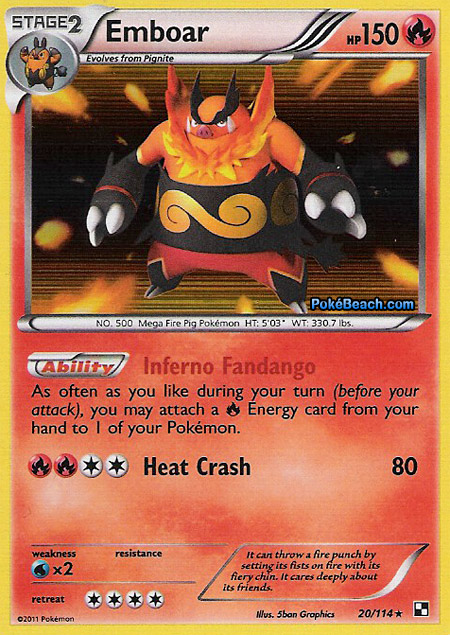
Why?: Emboar is a card that started off hot, but lately it just can’t seem to get a break.  First it was Typhlosion edging him out as the most popular combo to Reshiram, then Magneboar was broken apart at Nationals, and now the release of Pokemon Catcher might put that final nail in the coffin.  With a high retreat cost and a 4 energy attack that only does 80 damage, it is not fun to have Emboar active.  And that is just where Emboar will be once Catcher comes out.  I think you will see Emboar not being very popular until it gets another attack to pair up with.  It may be more of a rogue choice until then.

2.  Tyranitar Prime

Why?: I have never been a big fan of Tyranitar Prime.  Yes it has a big HP, but Donphan takes care of that.  Yes it can spread for 20 but that’s only 20 damage, it will take 5 turns before it starts piling up. The only real attack it has costs 4 energy and forces you to mill your own deck.  But, the card has had its share of supporters in the past.  It even had a couple good showings at this years nationals.  But, these showings each had bench sitters. The deck that used Reuniclus is gone because that deck just does not work now.  The deck with Serperior might still work because of the fact that Serperior can attack for 60 for GC.  But the fact is, these decks will be weakned by catcher more than they will be helped.  It looks like we may be seeing the end of Tyranitar, for now anyway.

3.  Boufallant

Why?:   The 2 retreat cost does hurt Boufallant, and does let him be brought up to be sniped around.  The unreliable attack also hurts his chances.  The good thing about Boufallant is that you don’t need to put it on your bench the turn before you attack.  You can play him down, attach a DCE, and retreat for him.  The problem is that once he is played, he can then be used to stall and snipe around.   Another problem is that if your opponent plays a Judge before he/she plays RDL, Cincinno, or whatever Pokemon you are using it against, it makes setting up Boufallant very hard.  Catcher will not kill Boufallant, but it is a little harder to play him. Machamp Prime

4.  Machamp Prime

Why?:   Machamp is usually played with Donphan as a heavy hitter.  It is usually played by having a Donphan active and building Machamps on the bench.  When the time is right you can evolve and do a “Fighting Tag”  for Machamp and then do a lot of damage.  But, in a format with Pokemon Catcher people can knock out Machokes and Machops before they can evolve.  Donphan Prime will still be a great card with Pokmeon Catcher, and Pokemon Catcher will not completely kill Machamp Prime, but for right now I think the Donchamp deck will not be as great with catcher.

Well that’s all for this article.  If ya know of any other cards that you think will be effected by Pokemon Catcher, please leave your thoughts in the comment box.  Remember Guest Writer week starts this Monday with Kyle “Pooka” Sucevich and continues Tuesday with Michael Slutsky.  Next week will be very exciting, so make sure you keep tuned to the website all week.

So long and thanks for all the fish!

Pikkdogs Pikks Three: What Would Happen? Lass, Pidgeot FRLG, and Broken Ground Stadium

A big hello to all you OHKOers out there.  This is Pikkdogs here with a special edition of Pikk Three.  This round of card reviews will be different, and frankly a little weird.  All three of the cards I am reviewing are cards that are not in the format, but I will review them as if they were.

I decided to do this because for the last couple sets, TPCI have been giving us a lot of re-prints of older cards.  Now in the format we have cards like Bill, Double Colorless Energy, and Pokemon Reversal.  We also have Pokemon cards that have qualities that are similar to earlier cards like Feraligatr Prime, Reuniclus, and the upcoming Archeops card.  TPCI has been giving us a lot of cards that we have seen before, so I thought what would happen if we get some of the more interesting cards from the past.

Before we get into the card reviews I have a reminder for you.  This coming Monday, Kyle “Pooka” Sucevich starts off Guest Writer Week at www.onehitko.com.  That means that for the next week we will have new authors writing articles for the site.  It will be a great week of great writers giving us a lot of different ideas.  Guest Writer week will lead us into our Worlds Reactions, which will lead us into our Emerging Powers coverage.  So the dog days of summer are over, and the www.onehitko.com coverage is just heating up.

Remember for these reviews I will assume that these cards will be entering the format, however THESE CARDS ARE NOT LEGAL.  I’m just reviewing them for fun.

Card #1 Lass from Base Set

Description– Lass was a trainer from the base set that let each player reveal their hand, and force each player to shuffle their trainers back in to their hand.  The challenge with this card coming in to the current format, if it ever does, would be the difference between items and supporters.  Back in the base set days there was no such thing as supporters, items were just a little stronger.  If this card did come to the format, there would have to be errata or a compendium update to rule whether Lass would require you to shuffle just item cards in your deck, or if it would also take away supporters.

Review– Of course the playability of this card depends on if it takes away supporters our not.  If it does, it would be an awesome card.  The perfect pair for Lass would be Slowking Cl.  You could make sure that your opponent had no supporters or items in his/her hand, and then make sure they don’t draw any with Slowking’s “Second Sight” Poke-Power.  It would be a great disruption card, as good or better than Judge. 

The card would be incredibly disruptive since nearly all decks rely on supporters for draw.  The best card in the game today is perhaps Professor Juniper, while PONT and Judge are widely played.  Without these cards, only decks with Ninetales would be able to draw.  Yanmega Prime decks would also be out of luck because it will be very hard to equal your hand size without Junk Arm, Judge, and Copycat.

If this card would not shuffle in Supporters, the card would still be semi-playable, but not nearly as good.  It would still be very disruptive, taking away cards like Junk Arm, Pokemon Catcher, and Switch; but not as great as it would be if it would take away supporters.

Rating9/10 if it would take away Supporters, 7/10 if it only took away Items.  This card has the potential to be a staple in the format if it did come out.  It is so disruptive that this card would help usher in some of the best disruption decks we have seen in a while.

Card #2 Pidgeot from Fire Red and Leaf Green

Description– Pidgeot was a 100 HP stage 2 Pokemon.  It had free retreat and a weakness to lightning.  It’s attack, “Clutch” did 40 damage for CC and prevented retreat on the following turn.  It’s Poke-Power, “Quick Search” let you search your deck for 1 card and then shuffle your deck after.  You could only use one “Quick Search” Power each turn.

Review– There is no need to say that Pidgeot was a great card back in the day, and was used in a lot of the best decks.  The ability to get any card from your deck is amazing in any  format.  It would probably be a staple in any format it was stuck in to.

The current format does not have Broken Time Space or a favorable Rare Candy rule, but this card would still be awesome.  It is well worth a 2-1-2 line in every deck with 2 rare candies. The ability to get any card you need would give you an awesome edge over a deck that did not have Pidgeot.  Plus, Pidgeot has free retreat, which is great in a format with Pokemon Catcher.

The free retreat means that your opponent cannot bring up Pidgeot and stall.  They could still pull it up and knock it out, 100 HP is not a lot.  If this card was not a straight re-print, and instead had the “Quick Search” power on a different card, the HP would probably be around 120, which isn’t terrible but still OHKO able by Reshiram and Zekrom.  So there are drawbacks to this card, but the Poke-Power is so good that you can live with them.

Rating9.5/10- It is tough to get a stage 2 out, but this card is worth it.  If it did ever get re-printed, I would be all for it.

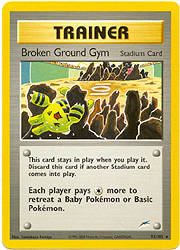
Card #3-Broken Ground Gym from Neo Destiny 

Description– This was a stadium card.  Remember kids back in the day when we had stadium cards, you know those trainer type things that always stayed in play? I jest, but stadium cards today stink compared to what they were previously.  This specific card added one to the retreat cost of each basic and baby Pokemon.

Review– This card doesn’t seem that great, but it would be a good counter to the current format.  Starters like Cleffa, Manaphy, and Stantler will be much worse with this card in play.  This card would hurt the consistency of a lot of decks if it could eliminate starters.  It could also hurt decks like Zekrom, Reshiram, and any more basic Pokemon that are used as main attackers.  It would not kill these decks, but it sure would not help them.

Rating7.5/10–  It would be hard to get this card early in the game when you need it, but if you can lock your opponent’s starter in place it would be worth a couple slots in most decks.

So what do you guys think of this type of article?  I don’t want to make this article a regular occurrence cause it could be confusing, but I think it could be fun looking at some older cards.  Please leave your thoughts about these cards and this type of article in the comment box.

So long and thanks for all the fish!

Big Announcement – Introducing…

Hey Everybody.

This is just Pikkdogs here to make a special announcement.

Don’t  get your hopes up, I’m not retiring.

But, I guess you could say I’m retiring for one week.

Ed and I are proud to announce that during the week of August 8th-14th, www.onehitko.com will be introducing its first “Guest Writer Week.”  During this week you will read articles from people who have never written on this site before.  The writers will be from all different areas of expertise.  From Nationals winners to league leaders, Guest Writer Week will have it all.

Ed and I have been working really hard on this week to try to get the best writers, and I think I can say that we got one of the best and most diverse groups of writers ever assembled for one week of articles.  The authors who have currently signed on for Guest Writer Week are, in no practicular order:

  1. Alan Traxler – Ann Arbor’s League Leader and player in Michigan.
  2. Jay Hornung – the 3rd place finisher of Worlds in 2009 and winner of too many other tournaments to mention.  He writes the “Jay’s Gym” article on sixprizes.com.
  3. Kyle Sucevich – also known as “Pooka,” he is the 2009 U.S. Nationals 1st place winner, finished in the top 4 in 2010, and got second place in 2011.  He currently is one of the masterminds of the show “The Top Cut.”  It can be found on www.thetopcut.net.
  4. Michael Slutsky – Competitive player in the Minneapolis area.
  5. Jordan Baker – Member of Team Warp Point and competitive player in the Detroit Area.
  6. Adam Capriola – Adam has many accomplishments including multiple Nationals top cuts (most recently this year) and multiple Worlds invites. Oh, and he has a little website you may have heard of called www.sixprizes.com.
  7. Radu C. – Competitive player in the Minneapolis area.  He top cut in this year’s U.S. Nationals and has won many other tournaments. He also has competed in Worlds.  He has the distinction of being the first player I have ever lost to, which doesn’t really matter that much to anyone but me.

Read More

Starters, Where Are We Now???

Hey all you OHKOers, this is Pikkdogs here with a strategy article. Starting Pokemon have been important since the rotation.  But, the way they are used have changed a lot over the summer.  To find out what will happen with them from now on, lets look back at what happened with Starters.

Before the Rotation

Before the rotation, most decks did not have a starter, decks were fast enough where you could probably do a decent attack on turn 1.  The decks that had a starter were Gyarados and Sabledonk, both of these decks ran Sableye.  Gyarados used it because that made it easier to put Magikarps in the discard pile, Sabledonk used it because it relied on two supporters working together in one turn.  Besides those exceptions, starting Pokemon were laughed at.

Leading up to Nationals

With the rotation Pokemon decks have lost a lot of draw power because of the loss of Uxie.  To respond to the HGSS on format, people have been using starting Pokemon in there deck.  These starting Pokemon have allowed decks to setup quickly without the need for draw power from Pokemon like Claydol or Uxie.

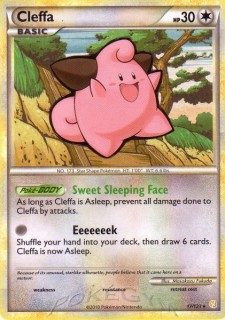
The most used starter at first was Cleffa.  It’s “Eeeeeek” attack lets you shuffle your hand in your deck and draw 6. It also puts itself to sleep, and thanks to his Poke-Body, he cannot receive damage from an attack while asleep.  The ability to hand refresh was really good, so most people put a lot of Cleffa’s in their Nationals deck.

Other starters that people were talking about were Manaphy, Tyrogue, and Stantler.  Manaphy has 60 HP, free retreat, and an attack that costs 1 energy and lets you shuffle your hand into your deck and draw 5.  Manaphy isn’t as good as Cleffa, but it has 30 more HP.  Tyrogue is a direct counter to Cleffa. I’m not sure if Tyrogue is an actual starter, but it is used early in the game.  It’s “Mischievous Punch” attack does the 30 damage neccessary to knock out Cleffa.  Stantler also was talked about, but not used as much. For one energy, Stantler let you search two basics from your deck and put them on your bench.

Nationals 

At nationals, most people decided to play a 3/1 mix of Cleffa and Tyrogue.  This gave them a good chance of getting a refreshed hand early, which means a great start, which means a better late game.  But, 4 baby Pokemon also meant that there was a good chance that you would start with a lone Baby.  This lead to a lot of games ending on the donk.  One player would start with a lone baby, the other would just Pokemon Collector for a Tyrogue, retreat, and end the game.  These donks happened a lot, and a lot of people got mad.  2nd place finisher Kyle. S used Manaphy as a starter instead, and just ran Tyrogue as a counter to Cleffa.  This helped him avoid being donked as much.  I also ran Manaphy instead of Cleffa, but I did not run Tyrgoue because my Pokemon had higher retreat cost, the inclusion of Manaphy instead of Cleffa was great because I did not suffer one donk the whole tournament.

Worlds

While, I’m not sure what the best decks at Worlds will contain, I do know what a lot of people are talking about now.  The talk now seems to be a 1/1/1 line of Cleffa/Tyrogue/and Manaphy.  As mentioned, Manaphy is good but not as good as Cleffa.  The 1/1/1/ line could change to a just 2 Manaphys if the player expects a lot of Tyrogue.  If the player does not expect a lot of Tyrogue, expect a Nationals like starter line of a lot of Cleffas.

It can be  expected that Manaphy will be the most popular starter for worlds.  Stakes are too high at worlds to run a deck that has a high shot at being donked, especially in the Grinders.  But, we must remember that although Worlds is a very important tournament, it is not a huge tournament.  In a 9 round Swiss tournament it is easy to get donked a couple times, it is a little harder to get donked in a smaller tournament like Worlds.  I think we could see Cleffa come back at Worlds.  We may not see as many Cleffas in one deck as we did at Nats, but I could see the average play being 2/1 with Cleffa and Tyrogue, but I know Manaphy will be very popular.  For testing purposes the 1/1/1 line is a good start.

I could also see a deck only running 1 Manaphy just in-case they need it, and not rely on starters as much.  As we saw at Nats, Starters can be a liability as well as an asset.

Pokemon Catcher and the Future 

Pokemon Catcher will definitely change the role of starting Pokemon.  Baby Pokemon will not be as effective as walls with their “Sweet Sleeping Face” Poke-Body.  If you encounter a sleeping Baby you can just use Pokemon Catcher to bring up something else and attack that Pokemon.  It will still force the opponent to waste 1 Pokemon Catcher, and your opponent won’t always have a Catcher early in the game, but it still is a bad thing for  Baby Pokemon.  Catcher will also effect the non-Baby starters.  Opponents can now bring up Pokemon like Stantler to force you to waste your energy drop on a retreat. And if you try to Sacrifice Manaphy, your opponent can bring up your main attacker instead.

But Pokemon Catcher is not all bad for starters.  Stantler may see more play since it makes evolving a lot easier.  If you “Call for Family” for two of the same basic Pokemon, your opponent will only be able to knock out one of those basics. You are then free to evolve the other basic normally.  Stantler is really good in a Catcher heavy format for a deck that relies on evolutions.

Future sets will probably also change the role of starters.  We are not sure of what decks will be great in BR’s, Cities, and States; but we can be sure that the new decks will probably change the roles of starters somewhat.  However, there doesn’t seem to be any great draw cards coming out, or any starters that are better than Cleffa.  We can assume that the starters that are used immediately after Pokemon catcher, will also be used in the coming months.

So that’s all for now.  I hope you enjoyed this look back at starting Pokemon and can use it when you are making your Post Catcher decks.  Please tell us what you think about the upcoming role of starters in the comment box.

So long and thanks for all the fish.

Deck Analysis: SAW (Slowking, Ambipom, and Weavile)

A big hello to all you OHKoers out there.  This is Pikkdogs here with a deck analysis.  This deck is a disruption deck that became popular after its great showing at Canadian Nationals. Like all of my lists from the last week or so on, this deck will be in the post Pokemon Catcher format.  Even though the card is not out right now, it is very important to start testing Pokemon Catcher right now so you will be ready for it in the fall.

This deck is all about hand disruption.  The goal is to have Ambipom attacking and disrupting, while Weavile is on the bench knocking out helpful cards from your opponent’s hand, and Slowking is on the bench making sure your opponent does not draw anything good.

Ambipom is a stage 1 that has two attacks.  His first attack, “Astonish” lets you do 20 damage and then choose 2 random cards from your opponent’s hand and have them shuffled back in the deck.  The second attack, Tail Spank (is that code?) does 60 damage and you must discard 2 cards.  60 might not sound like a not of damage, but it can be enough if you are able to attack weaker Pokemon with Pokemon Catcher, or if you attack a basic or stage 1 before it can fully evolve.  Weavile is used because of his “Claw Snag” Poke-Power.  Whenever you evolve a Weavile you can look at your opponent’s hand and discard 1 card from that hand.  Weavile can snipe for 30 damage, but this attack is not used that much.  Slowking is used for his “Second Sight” Poke-Power.  This power lets you look at the top of either decks and re-arrange the top 3 cards.

The goal of this deck is to make sure your opponent cannot draw anything useful.  The first thing you should do is get a Pokemon Collector and get 1 of each basic Pokemon, that means a Slowpoke, an Aipom, and a Sneasel.  I would first try to get an Ambipom active with a DCE.  Then I would use Judge to cut your opponent’s hand to 4.  Then I would hopefully be able to use “Claw Snag” to get rid of any supporter or other helpful card.  After that, I would use “Astonish” to shuffle in two cards of your opponent’s back to their deck.  At this point your opponent will draw a card and have 2-3 cards in his/her hand.  Usually your opponent will not be able to do too much.  Next turn you should be setting yourself up for another “Claw Snag” soon, and should be setting up another Ambipom. Now, the most important thing would be to do a “Second Sight” so that your opponent’s hand will not improve.  Then, hopefully you should be able to use “Tail Spank” for a knockout.  Then you should be able to take it from there.

Matchups

Right now SAW does not have the best match-ups, so I won’t list all the matchups up like I normally do.  This time I will list what this deck is good against, and what this deck has problems with.

What the Deck is good against

This deck is really good against decks that take a little while to get going.  This is where decks like Magneboar come in.  Decks that rely on 2 Stage 2 Pokemon are really easy for this deck to play against.  The disruption that this deck has makes it very tough to get more than 1 Stage 2, and Ambipom should be able to easily knock out important basics and stage 1’s with Pokemon Catcher.  It should only take you about 3 turns to get a hand lock going on them with Slowking Prime, it should just be a matter of time before you knock out 6 Pokemon.  This deck is also good against deck that need high energy like Blastoise.  You should be able to keep energy and other important cards away from the Blastoise player.

What the deck struggles against.

The deck struggles against decks that can attack early.  Donphan is a really tough matchup for this deck.  If the Donphan player gets a T2 Donphan with a fighting energy, the game is about over.  The fast attacking Donphan is really hard to play against because he doesn’t need a lot of maintenance once he is setup.   The other thing this deck struggles against is Zekrom and Reshiram, with the latter being the bigger problem.  Ambipom can only do 60 damage at a time, and these Pokemon require 130 damage for an OHKO.  If you do not OHKO these Pokemon, they can use the “Out Rage” attack to OHKO Ambipom.  Zekrom is not as much of a threat as Reshiram, since it is a little easier to keep energy away from Zekrom.

The List.

I built a SAW deck when I was first testing Post Catcher decks.  I ended up modifying it to a different deck with Sharpedo, so I do not have my original list.  The list was nothing special anyway, so I do not have a problem trying to guess at  my original list.  The deck does work with this list, but of course the list is not perfect.  I only post lists on decks like this so you can start testing with it and try to make it better and bend it to your play style.  This deck needs some work, but it is a good list to start with.   SAW is a decent deck that can be good in the Post Catcher Format.  So if disruption is your thing you should copy this list and then change it to make it your own.

Pokemon-18

  • 4-4 Ambipom
  • 1-1 Slowking Cl- I would like to run a 2-2 line, but Slowpoke is such a horrific starter that I don’t want to.
  • 3-3 Weavile-Important to have a bunch of these since you can evolve to Weavile, Seeker, and evolve again.
  • 1-Boufallant-Can be dropped if you don’t have lots of RDL in your area.
  • 1-Manphy

Trainers: 30

  • 4-Pokemon Collector
  • 3-Professor Elms
  • 4-Judge
  • 3-Professor Juniper
  • 4-Pokemon Communication
  • 4-Pokemon Catcher
  • 3-Junk Arm
  • 1-Flower Shop Girl
  • 1-Switch
  • 1-Dual Ball
  • 2-Seeker

Energy-12

  • Double Colorless Energy-4
  • Special Darkness Energy-4
  • Darkness Energy-4

As you can see, the deck is not polished.  It is just a place to start for your testing.  Since I no longer have my list I did estimate some things, but this should get you going on your testing just fine.  I think because of this decks bad matchups this deck may be just for fun.  But, it is a really good deck that can surprise a lot of people.  The only reason this isn’t tier 1 is because of the bad matchups that it is.  Once the format changes a little, this deck could be really good.  Regardless, it is a really cool fun deck that you should try if you haven’t already. What do you think of the deck?  Please leave you thoughts in the comment box.

So long and thanks for all the fish!

Pikkdogs Pikks Three: Zekrom, Metapod HGSS, and Recycle

A big hello to all you OHKOers out there.  This is Pikkdogs here with a Pikk Three article.  Of course this article like all the other Pikk Three articles, it will review three cards.  One card will be a card that is played a lot, another will be a card that I think is under-rated, and the third is from a new or yet-unreleased set.

Before we get to the article, I have an announcement to make.  The announcement is that there will soon be a big announcement about the site.  I know some of you might know about it,  but I will wait until this coming week to make the announcement.  The only thing I will tell you is that the announcement is big and will make the site really cool and really fun.  Stay tuned for more details.

Card #1 The Staple: Zekrom Black and White

Description– Zekrom is a basic Lightning Pokemon with 130 HP and a 2 retreat cost.  He is weak to fighting.  His first attack, “Outrage”, does 20 damage (for CC) plus 10 for every damage counter on this Zekrom.  His second attack, “Bolt Strike”, does 120 damage for LLC and does 40 damage to Zekrom.

Analysis– Zekrom was used a lot since it was released, and saw some decent play in the North American nationals.  It even won Canadian and Mexican nationals.  But, Zekrom got thrown around in U.S. Nationals and was no where to be found later in the tournament.

The 130 Hp is amazing for a basic and works great with “Outrage.”  The 120 attack is also good, but it can be hard to get the lightning energies on him fast.  The downside of Zekrom’s attack is that he damages himself making him more OHKOable.  This effect can be stopped by using Defender.  Defender lets you stop 20 of the damage that Zekrom does to it self, and 20 more damage that your opponent does to you, this adds up to the 40 that Zekrom does to itself.  In the future, it looks like there will be a tool version of Defender, so that will make Zekrom even more playable.

Zekrom is lucky that it has weakness against Yanmega.  Yanmega Prime will be very popular next season and Zekrom can OHKO Yanmega with his Outrage attack if he has 4 damage counters on him, or with “Bolt Strike.”  So I am pretty sure that Zekrom will be around in the format for a long time.  Zekrom is mainly paired with Pachirisu and Shaymin.  Pachirisu lets you lay down 2 lightning energies with Pachirisu, and Shaymin lets you move those to Zekrom.

Final Rating8.5/10- Not a big fan of Zekrom since its hard to power up Bolt Strike and I don’t wanna damage myself.  But I can’t deny that ZPS is a great deck and will be popular for a while.   

Card #2 The Underdog- Metapod HGSS

Description-Metapod is a stage 1 80 HP Grass Pokemon.  Metapod is weak to fire and has a 2 retreat cost.  It has a Poke-Body called “Green Shield”.  This body gives all Grass Pokemon no weakness.  Metapod’s attack is “sharpen”, which does 20 for CC.

Analysis– Well this is another one of the grass tech cards.  Its stats are horrible and cannot attack at all, but his Poke-Body could be very useful with Yanmega Prime.

If you were to pair Metapod with Yanmega you might have to give up some other techs, but you would be able to conquer Zekrom and Mangezone Prime, 2 Pokemon that are keeping Yanmega down.  The good thing about Metapod is that you probably will only need a 1-1 line of it to be effective.

The bad part of Metapod is that Pokemon Catcher will soon be out, and it will not be hard to take out bench sitters.  Even if the opponent cannot knock out Metapod, just having it active with that 2 retreat cost could be destructive to your chances of winning.

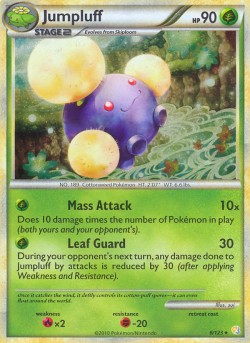
Of course you don’t need to play it with Yanmega.  You could also try it with Tangrowth, Serperior, and Jumpluff.  It is a very versatile card that is splashable into any deck with a grass Pokemon.

Final Rating6/10– I really like the idea of adding it to a Yanmega deck, and it almost seems mandatory in a Serperior deck, but nobody has proved that it is a great card yet.  I would have rated it higher, if Pokemon Catcher wasn’t coming out.  Now that it is, you can still play Metapod, you just have to be more selective when you do.

Card #3 The Young Gun- Recycle

Description– Recycle is a trainer that was in the Japanese Black Set.  It is expected to be released in English with the Emerging Powers Set.  This card kind of reminds me of Good Rod, but it is better.  It is a trainer card that lets you flip a coin, if heads you can take a card out of the discard pile and put it on the top of your deck.

Analysis–  Right now we don’t have a trainer that can consistently return a Pokemon or Supporter to your hand or deck.  This card could change all that. I think it has the potential to be a staple, although its hard to say how much playability a card like this will have next year.  All signs point to this being a pretty good card late game.   Although it is flippy, the ability to get a Professor Juniper back from your discard pile could be really amazing.

One way to deal with the flippiness is to use it with Junk Arm.  If you flip tails, odds are that most of the time you will flip heads the second time if you Junk Arm it back to your hand.  But we all know how flips go.

Noctowl pairs beautifully with this card.  Notice that if you flip heads, the card goes to the top of your deck, not your hand.  To get it into our hand, you can use Noctowl’s “Night Sight” to draw that card.

The downside of this card is obvious.  Why would you want to waste precious space in your deck for a card that might work if you by chance need it?  It is situational, but we won’t know how good it is tell we get it in our packs and we test it.

Final Rating6.5/10– As I mentioned, this card could be a staple or it could be as useful as a card like Pokeball.  We don’t know if this card has a great future, it certainly has not been hyped at all.  I am not sure what will happen to this card, but if I had to ebat I would say that this card could be pretty good…maybe.

Thats all for today kiddies.  Please make sure to leave you thoughts and ratings of these cards in the comment box.

So long and thanks for all the fish!

Deck Analysis: FloatZone

A big hello to all you OHKOers out there, this is Pikkdogs here with a post Pokemon Catcher deck analysis.

The subject of this article will be a deck that features Magnezone Prime and Floatzel.  One of the most popular decks going into Battle Roads will be Prime Time (Magnezone Prime and Yanmega Prime), this deck is a little different.  I consider this deck to be the spirtual successor to Mangeboar.  I am unsure if this a tier 2 deck or a fun league deck, maybe you can help decide.

Since Pokemon Catcher will make it more difficult to run a deck with bench sitting Pokemon, I decided to try a deck that had energy acceleration and free retreat from the bench sitters.  Now, you can still run Magneboar but in the Post Catcher (PC) format, the deck that started out a little shakey is about to get even shakier.

The decks main goal is to use Magnezone Prime’s “Lost Burn” attack to get a One Hit Knock Out each turn.  To get more energies on the field, Floatzel is used.  His “Water Acceleration” Poke-Power lets you attach a water energy to each Floatzel you have in play per turn, that does not include the 1 energy you can attach for your turn.

Of course this deck is very similar to Magneboar, so lets look at the pro’s and con’s of using this deck over Magneboar. Read More

Post-Pokemon Catcher impressions and a Mew Prime/Yanmega Decklist

A big hello to all you OHKOers out there, this is Pikkdogs here with another article for you guys.  For the top 40 players in North America and the players in Southern California all eyes are on World Championships.  All these people are thinking about is either countering the format or making a deck that will be consistent enough to grind into the main event.  But, for the rest of us, we have our eyes on Battle Roads and the new season.  And the new season means dealing with Pokemon Catcher.

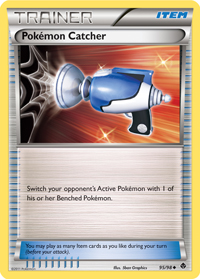
Pokemon Catcher is a trainer card that lets you pick a Pokemon on your opponent’s bench and switch it with the active.  The last time this card was released, as a card named Gust of Wind, it was the best card in the format.  It ushered in an era of dominance for a very fast deck with all basic Pokemon.  The question was will Pokemon Catcher have the same format changing effect as Gust of Wind did?  To answer these questions I decided to test multiple decks in the PC (Post Catcher) format.  The testing yielded some surprising results.  To start this article off I will begin by running a “Mythbusters” type list about statements people made about Pokemon Catcher.

Mythbusters- Pokemon Catcher

1.  Myth-Kenny Wisdom in his Sixprizes article said that some decks will be unplayable because they get destroyed by Pokemon Catcher.  It would make sense that decks that rely on bench sitters would no longer be playable.

VerdictPlausible.  I have not tested a deck with a bench sitter like Reuniclus and Vileplume, but I would assume that it will be hard to setup 2 bench sitting stage 2s.  But, if you need a bench sitter, it would be best to have either Gothitelle active or Vileplume on the bench.

2.  Myth: On the SixPrizes forum, a user named Johnny Blaze wrote that all Stage 2 decks will be horrible because you can just catcher up the basic first.

VerdictBusted.  Stage 2 decks are still  very playable.  In fact one stage 2 Pokemon named Vileplume could become one of the most important cards in the format.  Since everyone will be playing trainer heavy decks, the ability to take away the trainers will be amazing.  Also, decks with 4 Pokemon Catcher don’t always get one when they need it, and they can’t always knock out a basic or stage 1 if they do find a Catcher.  I think what is worse off than Stage 2’s are bench sitting stage 1’s like Weavile.  If you don’t also have Vileplume in play, those quick stage 1’s become a problem because anytime the opponent draws a Catcher, they can then stall by bringing up a bench sitting stage 1.  But when it comes to stage 2’s, it will be harder to get them out, but I would say they are still very viable.

3. Myth: Pokegym User Mew723 wrote that Emboar will be unplayable in the next format.  If you think about it, catchering up a Tepig or Pignite would be hard to deal with.

VerdictBusted.  I have tested an Emboar deck, and while it is no longer quite as consistent as it once was. it is not unplayable.  The same principle works in the PC era as it did in the BC (before catcher) era.  You might have to alter the decklist a little, but for the most part you can still run a Reshiboar deck about as good as you could before.

4. Myth:  This myth will address some of the comments made on my Pokemon Catcher article.  The comments are: Cincinno will be big, Zekrom is good, babies won’t be as effective.

VerdictPlausible. Cincinno is now a much more effective Pokemon than he was before.  He can attack fast and is almost on par with Donphan and Yanmega in some respects.  Zekrom was always good, he might be a little better now thanks to Yanmega being that good.  Babies will not be as popular as they once were.  Its just really easy to Catcher them up when you need, or to Catcher around them when they are asleep.  But, a lot of decks will run at least 1 Cleffa to help as a hand refresher.

Pokemon Catcher does change the format, but you know what they say about change.  The more things change the more they stay the same.  While some decks will be gone because of Pokmeon Catcher, the format will still come down to Donphan, Yanmega, Reshiram, Zekrom and other Pokemon that are currently popular.  Decks that run benched Pokemon can still win, players just need to change their decklist a little to adjust.  From my testing, it looks like all of those who say that Pokemon Catcher will ruin the format will be wrong.  So thats all for the Mythbusters episode, lets go to the list I promised you.

Mew/Yanmega: The Other Prime Time. 

I gotta give the credit for this deck idea to Radu C. from Minnesota.  I heard Radu was running this crazy good deck during Nats.  It had Mew Prime, Yanmega Prime, Spinorak, Muk, and Jumpluff.  The deck was like a tool box, it could lock, snipe, stall, or do lots of damage; it was a really cool deck.  After I had my rest after Nationals, I came home and made my own version of the deck.  It was not a polished list that was even near where Radu’s actual deck was, it was just a rough version of the deck.  My deck did okay, but nothing special.

Then I updated the deck to deal with Pokemon Catcher.  I took out Muk, because Pokemon Catcher does what he does, and I added Pidgeot instead.  Pidgeot is great for stalling against Pokemon like Reshiram, Zekrom, and Donphan.  Its “Headwind” attack adds an extra CC to each attack cost on the defending Pokemon.  If you first were able to Catcher up the Typhlosion or Emboar, Reshiram will be stuck active for a long time.

Goal of the Deck

The goal of this deck is to attack with Jumpluff’s attack or Yanmega while setting up a Trainerlock.  What you want to do first is to get Mew Prime active with a Psychic energy attached, and have him put Jumpluff and Pidgeot in the Lost Zone.  While doing this, get Oddish on the bench and try to evolve him to Vileplume.  If they catcher up an Oddish, wait until you have stalled with “Headwind” and then try a second time to get Vileplume up.  If they are able to catcher up 2 Oddishes, don’t worry.  This deck works better with Vileplume but it does not need it.  Sometimes getting the opponent to look at Oddish when your setting up Yanmega and Mew will be worth the loss of Trainerlock.  You should also try to get Yanmega going.  Once Yanmega is evolved and you have 2 Pokemon in the Lost Zone,  you just need to judge what attack is best to use.

Good Things About the Deck: 

  • It is so versatile that it can work against almost any deck, so far it has been the deck that has worked the best in my testing.
  • It is disruptive.  The ability to lock trainers is HUGE since almost all decks will be trainer based.  Judges also work well in this deck.

Bad things about the deck:

  • If you don’t get an early Mew Prime you will be behind the Eight Ball all  game.
  • This deck does not feature Stantler, which means  it can be hard to setup Vileplume.  The deck is not as good without Vileplume, but it is possible to get it evolved later in the game after a Judge.

The List.

Okay here is the list.  This is still a very early list, so don’t beat me up on this list.  I don’t think its polished at all, I am only posting it so that you can copy it and start testing.

Pokemon-17

  • 2-Oddish
  • 1-Gloom
  • 2-Vileplume
  • 4-Mew Prime-Your starter and main attacker, can use Pidgeot or Jumpluffs attack.
  • 2-Pidgeot CL or TM
  • 2-Jumpluff HGSS- Has the attack that you will use the most.
  • 2-Yanma
  • 2-Yanmega Prime-Great for Sniping and a backup attacker incase you can’t get Pokemon in the Lost Zone.

    Mew as seen by Ava

Trainers-30

  • 2-Professor Juniper-The best Supporter in the format.
  • 3-Copy Cat-A supporter that works with Yanmega
  • 4-Judge- Disruption and working with Yanmega
  • 3-Professor Elms Training Method- If you trainerlock yourself, here is how you get Yanmega, or this is how you get a Vileplume setup.
  • 4-Collector
  • 1-Flower Shop Lady
  • 1-Seeker- Can Seeker up Vileplume, use trainers, then Rare Candy on a 2nd Oddish to get the lock setup again.
  • 3-Rare Candy
  • 3-Communication
  • 3-Pokemon Catcher
  • 1-Dual Ball
  • 2-Junk Arm

Energy-13

  • 4-Rainbow
  • 4-Psychic- needed for an early “See Off”
  • 3-DCE-For Pidgeot’s attack and works well if your run Bouffallant
  • 2-Grass

I admit this is a weird list, but its just something to test around and fix yourself.  It is weird to have so many trainers in a trainerlock deck, but this is the one trainerlock deck that is not really reliant on the trainerlock deck.  It doesn’t matter if your opponent either  uses his/her  resources to knock out an Oddish or 2 while you setup with Mew, or they get trainer locked; either way you have an advantage.  Whether you lock them up, or you lure them into a false sense of security, it does not matter.  This deck can work with or without trainerlock. 

Techs

Here are some possible cards to fit into your list.

  • A hand refresher: Something  like Cleffa or Manaphy, either one helps consistency.
  • Boufallant:  If you are thinking people will still play RDL, then you will need Boufallant.  Though, Pidgeot’s attack will pretty much stop RDL from attacking anytime soon.
  • 1-1 Yanmega:  I originally built this deck with 3-3 Yanmega and I felt it a little overkill.  If you like Yanmega and know how to use it well, 3-3 might be the better play.
  • 1 Oddish– If you want a better chance to evolve into Vileplume early, here is a better shot.
  • 1 Spinorak– The list originally had a Spinorak in it.  The idea is to trap a starter, with it’s “Spider Web” attack, until the end of the game when you can retreat for Yanmega and kill that starter.  I’m just not that good at that strategy.
  • 2-2 Cincinno:  This deck si great for Yanmega, but if just cannot afford Yanmega’s, Cincinno may be able to appropriately replace Yanmega.

So that’s all I gotta say about this deck.  Expect more PC decklists coming soon.  Feel free to tell us all what you think about this decklist by leaving your thoughts in the comment box.

So long and thanks for all the fish!