Unfortunately, it seems that no one has interest in this site anymore. Hopefully we will gain some traffic due to the shout-out on The Deck Out, but I doubt it will be that much. I think the down spiral for OHKO started with Pikkdogs leaving. Please, if you can write, contact Ed and see if you can become a writer and hopefully breathe new life into this site. Also, if you still regularly check OHKO, please comment so I know about how big our following is. I will try to write as much as I can, but I will not write if no one reads it. I would really love for this site to reach its former glory. However, this requires for YOUto do some active participation.
So I’m sure most of you have heard of this by now, but for the few of you who haven’t, Jason Klaczynski, the only two-time Pokemon TCG Worlds Champion, is hosting a unsanctioned tournament next month. The hope is for it to spiral into a full-blown TCG circuit that will run alongside the official Premier tournaments. NOTE: The following information is off of the event’s webpage (http://ko2013.eventbrite.com/), and none of it has been altered in any manner.
The official logo for the 2013 Klaczynski Open (KO).
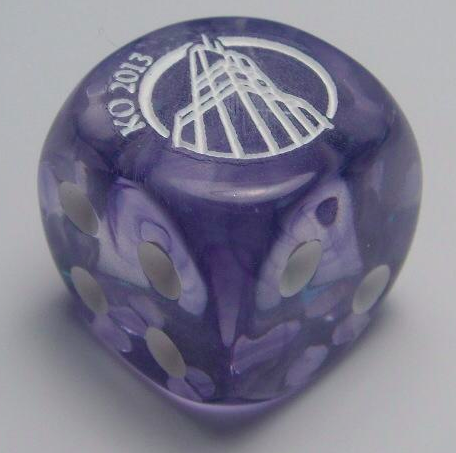
The official custom die given to all entrants of the KO.
14 & Under Event (open only to players ages 14 and under)
All entrants will receive a customized die bearing the name of the event!
Format
2013-’14 Modified (Black & White – Plasma Blast*)
*This format is preliminary and may change.
Tournament Schedule
Day 1 (Saturday)
Both events will host five or six rounds of Best 2-of-3 swiss, featuring a 75 minute + 3 turn time limit, as well as a Lunch break. Side Events will be available throughout the day.
Doors Open: 8:00 A.M.
Deck Lists Due: 9:00 A.M.
Round 1 Begins: 9:30 A.M.
If you submit a deck list online (see below for information), simply arrive by 9 AM.
Day 2 (Sunday)
Play resumes: 9:30 A.M.
14 & Under will begin Top 8, single elimination (Best 2-of-3, 90+3). Main Event players will play one to two more rounds of swiss before a lunch break and then begin a single elimination top cut (Best 2-of-3, 90+3 for Top 8/Top 4, Best-of-5, untimed for finals).
2nd Place: 18 Plasma Blast Booster Packs, The Top Cut playmat
3rd Place: 12 Plasma Blast Booster Packs
4th Place: 10 Plasma Blast Booster Packs
5th-8th Place: 8 Plasma Blast Booster Packs
Accommodations
The Tinley Park Convention Center is conveniently connected to the Holiday Inn, which is offering a discounted group rate for rooms to our group:
Friday Night: $169 +tax
Saturday Night: $149 +tax
Sunday Night: $149 +tax
Enter group code POK on their web-site to receive this discount.
Note: Only rooms with 1 King bed receive the promotional rate. Rooms with two beds are only available for Saturday & Sunday night, and are slightly more expensive.
Players that lose a game in a Best 2-of-3 match always have the option to play first in the next game of the match. (In sanctioned events, Sudden Death games replace this choice with a coin flip, allowing a player to potentially play first in all three games.)
All language Tropical Beach cards are permitted in decks.
If you’ve never played a sanctioned or premier event, or need a refresher, here’s a list of our rules.
Conduct
Because this is a family event, players are also expected to act accordingly and avoid foul and abusive language. While trading of cards is fine, selling cards or merchandise at the venue is prohibited except for the on-site vendor. Anyone who violates these rules may be asked to leave.
Cheating
Players caught cheating intentionally (at the discretion of the Head Judge) will be disqualified without prize and removed from the event. Additionally, players caught cheating may be banned from future events. Our experienced and knowledgeable staff of judges will be on the look out for players attempting to cheat. Do not risk embarrassing yourself — you will be removed from the venue.
Is the promotional rate of $149/night available on Friday night?
Because of limited rooms, the promotional rate offered by the Holiday Inn is only available for Saturday & Sunday night. The rate on Friday (and other nights) will be the standard $169/night.
Are ties possible in matches?
All matches will play down to a winner and loser. Ties may be used in future events in swiss rounds.
Is there food on site?
Food will be available at the event. Additionally, there are several nearby restaurants, some walking distance from the Convention Center.
Depending on availability, players may enter the Main Event by paying $45 at the door. Attendance is limited, so purchase your ticket online to ensure your seat at the event.
14 & Under Event players may also enter by paying $35 at the door, but attendance is limited. Purchase your ticket online to ensure your seat at the event.
Are tickets refundable?
Tickets are non-refundable and must be used by the participant listed on the ticket.
Will The Top Cut be at the event?
The Top Cut, including Kyle “Pooka” Sucevich will be at the event, streaming featured matches throughout the duration of the tournament.
Can a player age 14 or under play in the Main Event?
Yes. Younger players wishing to challenge themselves and compete for larger prizes are welcome to play in the Main Event.
Will online pairings be available?
Yes. Round pairings will be posted online in addition to at the event.
Can a player suspended from another organized play program articipate in this event?
In the interest of creating a fun, fair and enjoyable tournament atmosphere for all, players currently suspended from any other organized play program should contact the tournament organizer for approval before purchasing their ticket.
Facebook Group
Questions about the event? Wondering who’s going? Join the Klaczynski Open Facebook group!
Small changes may occur to the structure or rules of this event. Check here or our Facebook group to stay updated!
Esa Juntunen from The Deck Out at the 2012 Top Cut Invitational
I’ve decided to start a new series to hopefully breathe life into this site again. I will be interviewing major players in the Pokemon community, asking them anything from their opinions on the metagame to what their favorite sport is. First off is Esa Juntunen, winner of Finnish Nationals a grand total of six times! Before I start, I would like to say that this interview took place over email in early October, 2012, so some things may seem a little dated. So without further ado, let’s get this started.
OneHitKO: A lot of people disagree on how to pronounce your name. How should it be pronounced?
Esa: That’s a question, I get asked a lot and in fact, I answered to that question in one of my blogs’ entries (right before World Championships). If you click this link: http://translate.google.com/#fi|en|esa The google translate will pronounce my name as close to the real pronunciation as artificially possible. However, in the 7 Worlds, I’ve been, I’m so used to misspelling my name that I don’t really mind it.
OneHitKO: On to some more serious stuff, what made you want to play competitively?
Esa: The competitiveness is in my nature. No matter what I do (sports, school etc.) I have always been competitive. I get the most out of any hobby when I do it competitively and aim to the top. As I’ve become older I have noticed that I’m not as competitive as before, but I still enjoy winning, so I’m still pretty competitive. I was in my first tournament in 2002 when I was 11-years old and in my first official tournament I was in 2004.
There are several ways to cheat at even the slightest things. Cheaters can draw an extra card, manipulate the outcome of a die roll or coin flip, or even stack their deck. This article will expose every way I know how to catch cheaters. The two largest Nationals are virtually upon us, and I hope this will let potential would-be cheaters know that it’s not okay by exposing their tricks.
We all think we know what cheating is, but do we actually know? The definition of cheating as “to violate rules or regulations”. Seems simple enough, right? Wrong. Cheating is the act of purposely gaining an unfair advantage over an opponent through manipulation of events and outcomes. If someone were to draw an extra card from their deck without meaning to, it wouldn’t be cheating. If they did it purposely/consciously, however, it would be cheating.
Before we get into specifics, I must advise you that accusing your opponent of cheating is a very strong accusation and should never be done unless you have proof. If you believe that your opponent is cheating, report it to a judge so they can keep watch of the player. Even if you truly believe that someone is cheating, there may be circumstances you don’t understand. Always let the judge handle it. Give them the information you have, and let them do their job.
Riffle shuffling (like how most people would shuffle a deck of playing cards) can be an easy way for someone to make sure certain cards stay on the top or bottom of the deck. By releasing the bottom card of one stack sooner than the other, they could prevent that card from mixing into the deck. The same goes for the top card. The only difference is that they release that card later than the top card of the other stack. Once again, the way to prevent this is to always shuffling your opponent’s deck like how I am in Fig. 1, or you can simply just cut your opponent’s deck (which wouldn’t help thwart the double nickel). My recommendation is to always cut (or shuffle) your opponent’s deck after they do. It’s just a good habit to get into.
Overhand Shuffle:
The overhand shuffle is the most common way of shuffling, because it’s so simple and fast, but a would-be cheater can manipulate the deck while doing an overhand shuffle. What they can do is grip the one card that they want left on top and release every other card just like they would with a proper overhand shuffle. If done correctly, an opponent may not notice that the top card isn’t moving. Once again, preventing this just comes down to making sure that you cut or shuffle your opponent’s deck.
Hindu Shuffling:
This technique seems to be more prevalent in Yu-gi-oh, but the idea is similar to the overhand shuffle. What happens is the cheater can lock their fingers of their dominant hand on the bottom card(s) and pull out about half the deck and slowly places the cards on their deck until the card(s) they gripped is on top. If that’s not clear, it doesn’t matter. The point isn’t to learn how to cheat, the point is to prevent and spot cheating. Just know that this technique will result in one or more specific cards being placed at the top of the deck. Again, this is easy to thwart. Just cut or shuffle your opponent’s deck. Spotting these shuffling tricks can be difficult, so just watch the opponent and always cut their deck.
This is another one of those tricks where a would-be cheater needs a specific situation to pull something. When a card, like Pokegear 3.0 for example, has them draw a certain number of cards (separate from their hand), they could look at the cards, then their hand, then the cards, and so-forth until they see fit. They could possibly thinks about which set of cards is better for the exact situation and follows the affects using the better one of the two “hands.” If the cards they drew from the Pokegear’s effect (in this example) are better, they could take those cards as their new hand. If not, then they just act like nothing happened and continue on normally. Again, watch your opponent. Make sure you keep track of which is really their hand. Don’t think that because it’s not your turn that it means you’re not in the game.
Palming:
Because a potential cheater will need large hands to pull this stunt, Juniors and Seniors probably need not concern themselves here. A would-be cheater could place a card in the palm of their hand at some point in the game, and it can remain hidden by the back of their hand until they need it. The way to spot this is that their hand becomes very rigid and can’t bend easily. If you suspect this, just ask them to spread their fingers to see if they are palming. If they have nothing to hide, they will have nothing to worry about. If they don’t want to show their palm, just call a judge. When in doubt, never accuse, just call the judge and explain the facts.
Sleeving:
Similar to palming, sleeving is hiding a card. The only difference is that it’s in a sleeve sleeve. If your opponent is wearing long sleeves, it’s okay to ask them to roll them up before the match. Most people are reasonable and will, but people are free to wear what they want. Don’t be offended if they deny the request. Just keep alert as I recommended earlier, and watch the opponent’s sleeves and hands whenever they are handling cards. If you have to take your eyes off of them, ask the number of cards in their hand and for them to fan out the cards so you can count them before you switch your attention. Many high level players will ask the number of cards in their opponent’s hands multiple times even during the same turn. It’s a good way to understand your opponent’s game state, and the side effect is to thwart palming and sleeving.
Lapping:
Another way to hide a card is also similar to palming and sleeving, only it takes place in the lap. Unless players are getting something off of the floor, they are actually required to keep their hands above the table. However, a cheater using lapping will often accidentally “drop” part of their hand during the set-up into their lap. Simply Just ask that they put all the cards back into the deck and for you to re-cut just to prevent them from cheating. You can ask them if it’s okay for you to count their deck 6-pile shuffle it (which will result in 6 piles of 10 cards). Like people asked to pull up their sleeves, most will think that it’s the honorable thing to do and let you, but you’ll come across someone who won’t call a judge and ask them to randomize the opponent’s deck. You should never need a reason to shuffle an opponent’s deck after they’ve shuffled, but it’s polite to ask permission.
Dice/Coins
Figure 2
Always Flipping Heads:
This happened a few years ago at US Nationals in Juniors. A kid had flipped heads every time he needed to flip a coin. A judge finally noticed it and gave him another coin to use. The kid couldn’t pull of a head every time he flipped it. Apparently, he practiced with the coin so much that he could always flip heads. Just call the judge if you see this and tell them that you believe that the opponent has an insufficient method of randomization as far as always flipping heads. Again, you never know why a person is doing something. In Juniors for example, some kids think it’s a challenge to try to flip heads. They may not realize that it’s against the rules. A judge can help educate them, and you will be doing all of their future opponents a favor by giving the judge the opportunity to correct the behavior.
Always Rolling Heads:
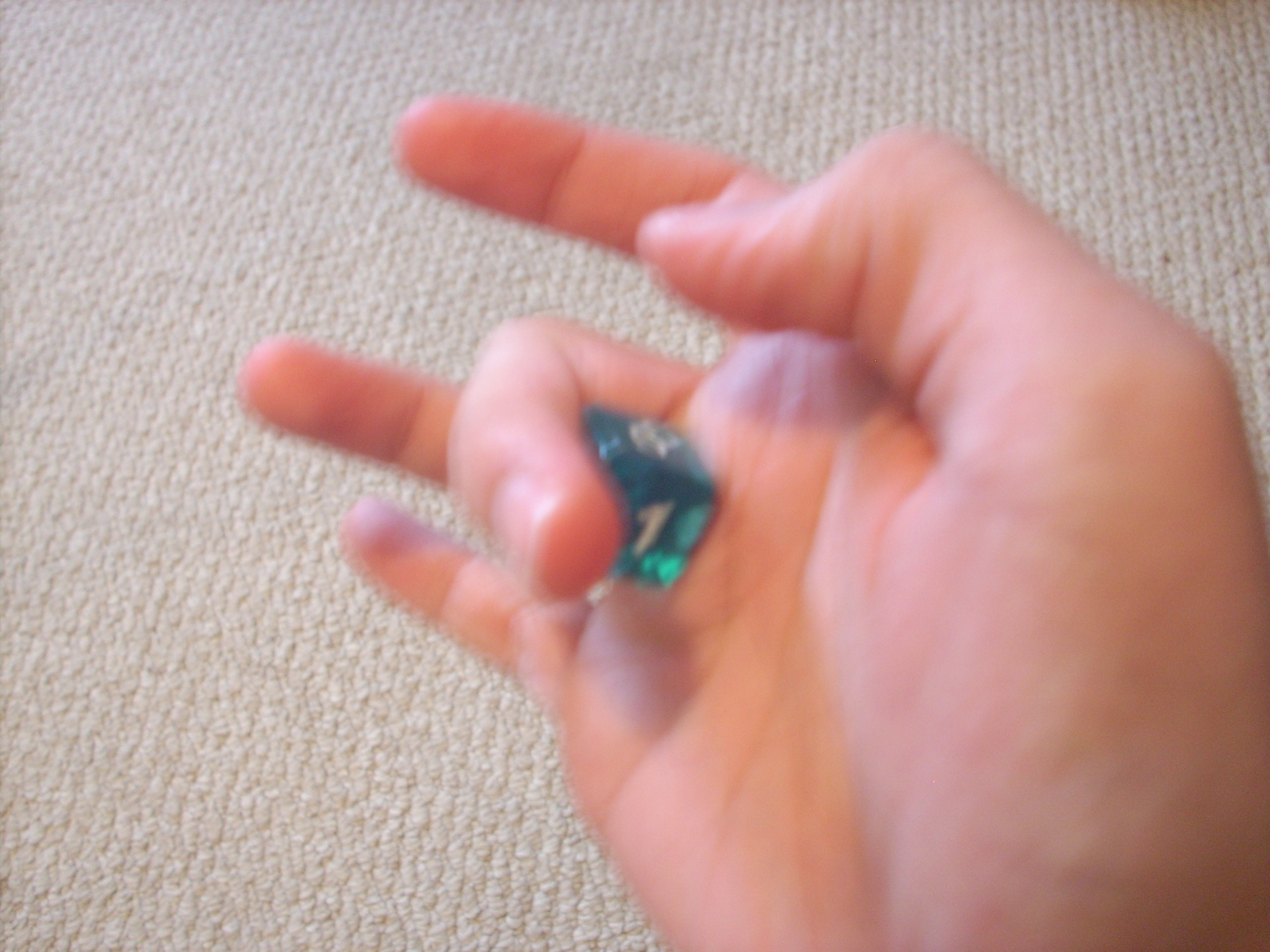
This is one of those tricks that people in Las Vegas in try to use. A cheater attempting this picks up their die, then they’ll fit it between their middle finger and their palm like in Fig. 2. The number they want is placed towards their thumb, and their fingers are set even to each other. When the die is dropped from the hand onto the table, they are careful to not “roll” it. This is what is referred to as a “straight drop”. If you see this, you can just ask your opponent to re-roll the die, because it has to turn at least three times according to official rulings. If they don’t want to, just ask a judge how to proceed. The same thing goes for a coin. If it doesn’t turn three or more time, they should re-flip or re-roll.
I hope this helps you in your future tournaments. The main two points to take away from this is to always shuffle/cut your opponent’s deck after they shuffle and always keep alert even when it’s not your turn. These two things alone can help thwart attempted cheating. If everyone does these things to keep cheating down, it will foster an environment where would-be cheaters become won’t-be cheaters. I hope you have a successful and cheat-free Nationals!
Note: This deck contains cards that are not yet released.
Deck Strategy
I was looking at the Dark Rush scans to predict what will be coming in our Dark Explorers set, when I saw the new Volcarona in Dark Rush. Here is the direct translation from Pokebeach:
“Volcarona –Fire–HP110
Stage 1 – Evolves from Larvesta
Ability:Burning Scales
As long as this Pokemon is in play, the number of damage counters placed on your opponent’s Burned Pokemon in between turns is now 4.
[R][C][C] Heat Wind: 70 damage. You may choose 1 Energy attached to this Pokemon and discard it. If you do, the opponent’s Active Pokemon is now Burned.
Weakness:Water(x2)
Resistance:none
Retreat: 3
15/69″
I instantly thought of a crazy rouge idea to drive the EXs insane. What you do is you set up Volcarona on the bench then you also set up Houndoom Prime on your bench. The goal of the deck is to do massive amounts of damage using burn and attacking with Blaziken. Blaziken’s purpose in the deck is to be an extremely strong attacker and possibly deal burn. This is the translation for Blaziken:
Blaziken – Fire – HP140
Stage 2 – Evolves from Combusken
[R][C] Blaze Kick: 40 damage. Flip a coin, if heads this attack does an additional 30 damage. If tails the opponent’s Active Pokemon is now Burned.
[R][R][C] Flamethrower: 130 damage. Choose 1 Energy attached to this Pokemon and discard it.
Weakness:Water(x2)
Resistance:none
Retreat: 2
12/69
Deck List
This is what a skeleton list for the deck I now dub “Crash&Burn” would look like:
Pokemon: 18
2x Houndour 54/90 UD
2x Houndoom Prime
2x Larvesta DarkRush
2x Volcarona DarkRush
3x Torchic DarkRush
2x Combusken DarkRush
3x Blaziken DarkRush
2x Entei EX DEX (confirmed to be in Dark Explorers)
T/S/S:24
4x Collector
4x Junk Arm
3x Communication
3x Rare Candy
4x PONT
2x Juniper
3x PETM
1x Seeker
Energy:10
10x Fire
Total: 52
Free Space: 8
I find that all of the cards in here have either been explained or are self-explanatory.
Techs:
Typhlosion Prime: a 2-1-2 line won’t be enough, but this deck could use a good source of energy acceleration.
Houndoom UD+ Rainbow Energy: we all know that Dark.dec and Zeels will be on the rise, therefore, it would make sense to say that Troll and Quadrakion will be big too. This helps seal the Troll match-up by doing that extra damage if Fighting types are on your opponent’s field.
Pokemon Catcher: This one is a pretty obvious tech as it lets you control which Pokemon is getting Burn damage.
Switch: You may need to retreat some for this deck.
Matchups:
As much as I hate to say so, this section is purely theory because we don’t know what cards will be out and what won’t.
Zeels: 45-55:
This matchup comes down to who gets set up first. If the Elektriks are set up before your Volcarona and Blaziken, to put it simply, you’re dead.
CMT: 35-65:
This deck is just too fast for Crash&Burn. The Celebi are set up too fast. If you get lucky and face a CMT with Terrakion, that’s when the Houndoom UD comes in handy. If you’re scared of this matchup, put Houndoom Prime and UD in Crash&Burn.
Durant: 40-60:
Once again, you have a deck that tends to be quicker than Crash&Burn. You also have the problem of the Durants milling you. Crash&Burn is not equipped to lose resources. Not the most favorable of matchups.
Dark.dec/Darkrai.dec/Dark Toolbox/ etc.: 35-65:
Look! It’s the deck of many names! To put it gently, you have very little to no chance of winning this. Dark.dec is fast and has free retreat. Free retreat is the worst nightmare for this deck because when you Burn someone, it just gets retreated.
Conclusion
So that pretty much wraps up the deck. It has some synergy, but not a whole lot. The main key is to get set up as fast as possible and cause the opponent to crash, and then Burn.
Hello, OneHitKO readers! As this is my first article ever, I feel that I need introduce myself and show a little bit of what I can do. You may have seen me on 6p and PokeGym as Darkwing34, in person as Scott Creech, or in comments as Balasar. I have been collecting the cards for seven years, and have been playing for four. I have never made it to top cut, but I’ve gotten close in the past two tournaments. One of those tournaments was the Muncie City Championship, and the other being the Indiana State Championship. In the Muncie Cities, I placed third out of eight, and at Indiana States I placed fourteenth out of fifty-three. Without further ado, let’s get to the article.
What I Ran
I decided to play Durant just because being a Senior puts a budget on you. This meant no Mewtwo EX for me. Here is my personal list. Please feel free to use it; just don’t take credit for it.
Pokemon: 5
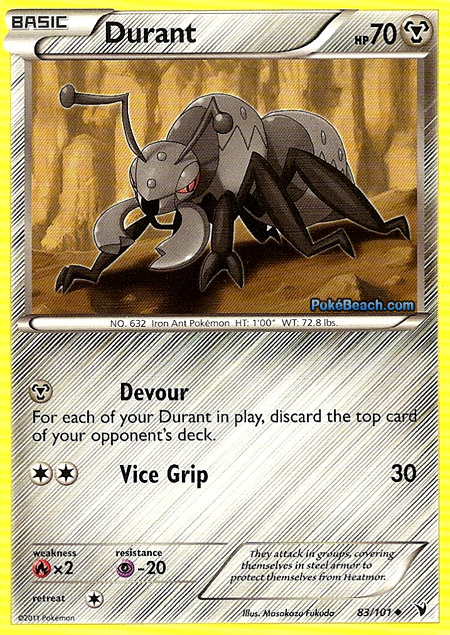
4x Durant
1x Rotom
T/S/S: 44
3x PONT
4x Collector
2x N
2x Twins
1x Black Belt
1x FSL
2x Prof. Juniper
1x Skyarrow Bridge (SAB)
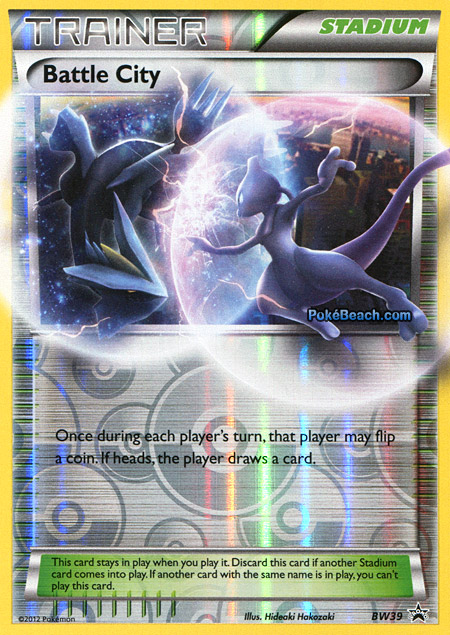
1x Battle City
1x Alph Lithograph (FOUR)
3x Lost Remover
4x Crushing Hammer
3x Level Ball
2x Pokemon Catcher
4x Revive
4x Junk Arm
3x Pokegear 3.0
3x Eviolite
Energy: 11
1x Prism
1x Rescue
4x Special Metal
5x Basic Metal
The basic strategy is the same as any Durant deck. I found Black Belt needed in this deck over other cards just in case I needed to attack with Rotom. The tournament was smaller than I expected. We only had forty-some Juniors, fifty-three Seniors, and about 160 Masters. The tournament in general certainly was a little odd as far as what I saw play.
Round 1: Tristian V. (Terrakion/Electrode Prime/ Zekrom/Kyurem/Kyurem Ex/ etc.)
This was against a major binder deck. After setting up, he won the coin flip and started out with a lone Terrakion. He wasn’t able to get energy on it until T4 or T6. I had three Durant up until T5. On my first turn, I was able to Devour his 1-1 Electrode Prime line, which was his only form of energy acceleration. I was able to discard all of his Pokemon with the exception of his lone Terrakion starter. This was quite the easy game.
(1-0)
Round 2: Asher K. (Samurott-Ability/KGL/Feraligatr)
This certainly was a fun match since Asher is from my league (GO SUMMIT CITY ELITE FOUR TRAINING!). Asher has been constantly trying to get Kyogre & Groudon LEGEND to work in a deck for a while now. This just happened to be one of his attempts. I won the coin flip and opened with a lone Durant against his lone Oshawott. I played Collector to get two Durant and my Rotom because my fourth Durant was prized. I wasn’t able to get it out of my prizes until T7. That didn’t matter as much as it should have because he wasn’t able to get his Oshawott evolved at all until T8. I think he only drew two prizes. This was also a relatively easy game.
(2-0)
Round 3: Kaitlin Y. (CMT-actually stands for Celebi/Mewtwo EX/Terrakion)
For those of you who don’t know, Kaitlin is, as of 6:36 PM March 17th, ranked sixtieth in Championship Points for Seniors. I knew that this would have been an uphill battle from the start. I went first, and at the time when we started, I realized what she was playing. She opened with a lone Smeargle against my lone Durant. I was able to get two of my other Durants out, but wasn’t able to get the fourth until T7. Kaitlin wound up taking all of the six prizes with one of her Terrakion. This was probably the hardest of my battles today.
(2-1)
Round 4: Alexandra K. (Mirror)
Alexandra’s form of shuffling showed me that her deck contained a Junk Arm, Collector, and Lost Remover. I recognized that she was also playing Durant before we even got set up. After the flip, I was able to get two more Durant and my Rotom in addition to my starting Durant. She was able to get all of here Durants out T2. At first, I thought about scooping because I know that in mirror matches, whoever gets four Durants out first, wins. I’m really glad that I didn’t because of a few misplays that my opponent made. First of all, she played a Juniper when she was getting low on cards. Second, she decided to PONT when she had fewer than six cards in her hand. She also only played one Pokemon Reversal instead of Catcher. I don’t mean to insult her or anything; it was just obvious that she didn’t have much experience with it. After the match, I asked her how long she had been playing Durant, and she said that today was her first day using it. I wound up never getting the fourth Durant, but still won due to her misplays. She certainly wasn’t a bad player because I had only one card left in my deck when I won, so luck just may have been on my side.
(3-1)
Round 5: Alder P. (Zekrom/Zekrom EX/Eels)
I had no clue who I actually was playing until the end of the game. I was able to pull of the T1 Durant set up, but that didn’t help a lot. What actually saved me was Lost Removing his DCEs. I was able to deck him down to seven cards, when he pulled out a Juniper to pull out his last DCE, attached it to his Zekrom EX, and Strong Volt for his final prize. After the game, he mentioned that I almost beat the Senior that is placed tenth in the country for Championship Points. If that wasn’t a confidence booster, I don’t know what is.
(3-2)
Round 6: Nicholas S. (Zekrom EX/Zebstrika/Eels)
By now, the other two guys from my league had also gotten a record of 3-2. This proved our consistency as a league. I recognized my opponent from previous tournaments, so I knew a little bit about him. This allowed me to crack a few light-hearted jokes here-and-there, which lightened the mood a lot. Once again, I went first and started with some extra draw power due to some Mulligans that my opponent had. I was able to start with two Durants in play and a Collector in hand. I got even better luck, and my other two Durants were in my deck. I was able to get the Devour engine going from T1. My opponent wasn’t able to get much energy out on the active because Dynamotor can only attach to the bench. He got one Zebstika loaded up with energy, but wasn’t able to retreat or Switch his active Zekrom EX. Let’s just say that this was a relatively easy game.
(4-2)
Conclusion
As stated above, I placed fourteenth out of fifty-three. I missed the top cut by six places though. There was one mantra in particular that I found helpful with Durant. That was “Deck out or die”. This was said by one of my fellow leaguers (and Durant players), Josiah. What this means is that with Durant, you should never attack, only mill. This definitively helped in some of my matches. I just want to take some time to thank James H., Josiah K., Jesse K., Rob, Michael W, and my sister (Stephanie C.) from my league for lending me about one-third of my deck.

 balasar